Key takeaways
The practical starting point
- Keep the area gently clean and dry
- Choose a supportive well-fitting bra
- Broken, infected-looking or persistent skin needs a clinician.
Find where friction and moisture meet
Chafing often feels sore where surfaces rub. A strongly itchy, odorous, weeping or sharply bordered rash may need assessment.
Do not diagnose under breast chafing from one photograph or one product response. Look at timing, location, sensation and repeat triggers before changing several steps.
Prevent rubbing before skin becomes raw
Use a short routine long enough to understand what changes comfort and what creates irritation.
- Keep the area gently clean and dry
- Choose a supportive well-fitting bra
- Change damp clothing
- Use external friction products only as labelled
- Avoid strong acids on irritated folds
Heat, clothing and medical red flags
Do not assume every fold rash is only sweat. Recurrent deep lumps under breasts can occur with hidradenitis suppurativa.
Broken, infected-looking or persistent skin needs a clinician.
Questions before a long day or workout
Write down the answers before changing the routine. They often reveal a trigger that a new product cannot fix.
- Is the main symptom rubbing, itch or pain?
- Is there odour or weeping?
- Does the bra seam rub one point?
- Are deep lumps recurring?
What a friction product can do
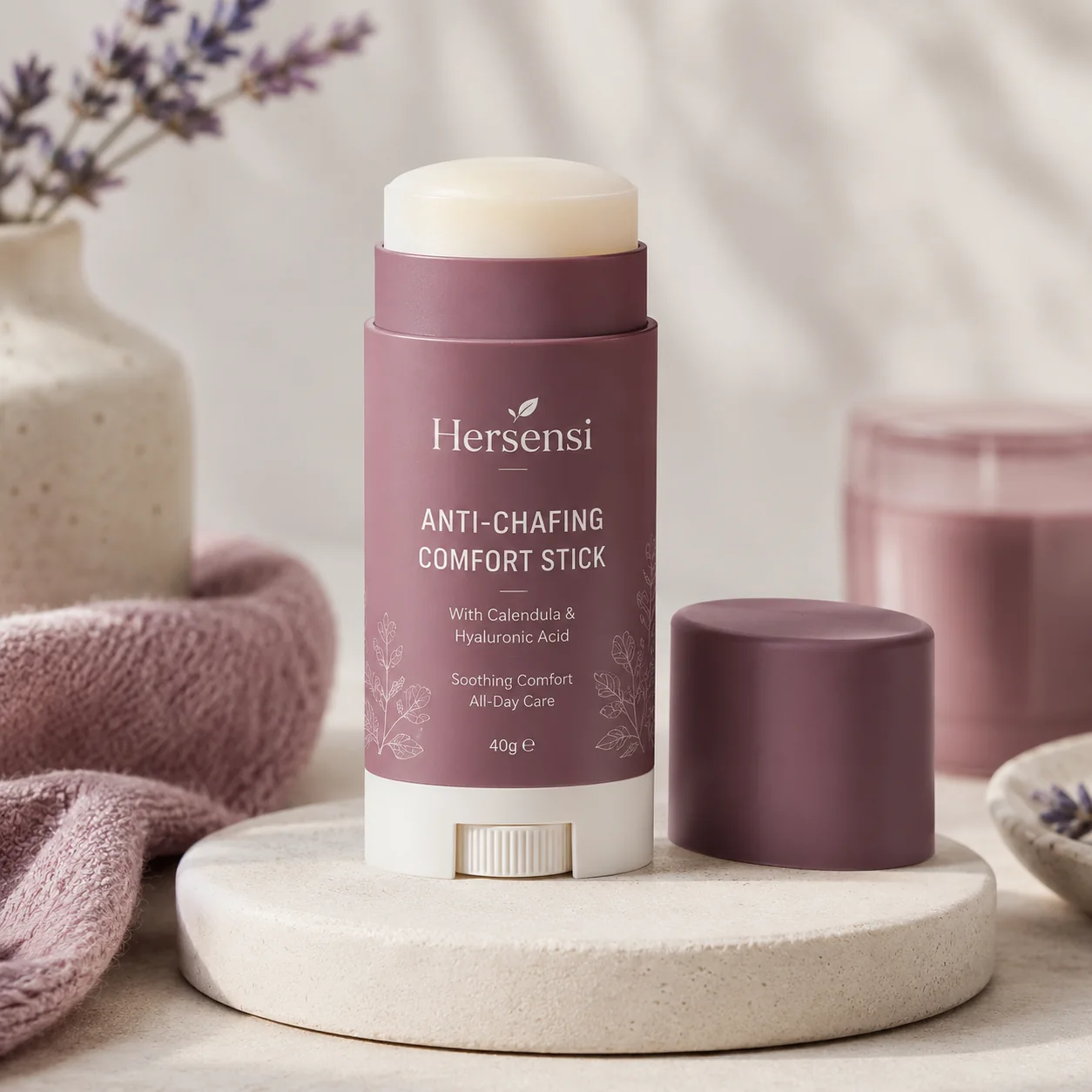
For the situation covered in under-breast chafing: friction, sweat and when it may be a rash, a friction product may create slip on intact external skin. It does not treat infection, an unexplained fold rash or open wounds.
Wear time, heat stability and clothing transfer are product-specific, so field testing and clear reapplication directions matter.
Common questions
Questions people ask before changing the routine
Can I use a stick under breasts?
Only if the label permits that external area and skin is intact.
Should I use powder?
Powders may help some people but can cake or irritate.
When should I seek help?
For recurrent rash, pain, discharge, broken skin or deep lumps.
Editorial sources
Where the safety framework comes from
These sources support the general educational and safety boundaries in this guide. They do not validate a specific Her Sesni formula or replace personal medical advice.
- How to prevent and treat blisters — American Academy of DermatologyFriction-reduction measures relevant to repeated rubbing and chafing.
- Hidradenitis suppurativa — NHSA condition that may be mistaken for acne or ingrown hairs, especially in skin-fold areas.
- Allergens in cosmetics — U.S. Food and Drug AdministrationBackground on cosmetic allergic reactions and ingredient sensitivity.