Key takeaways
The practical starting point
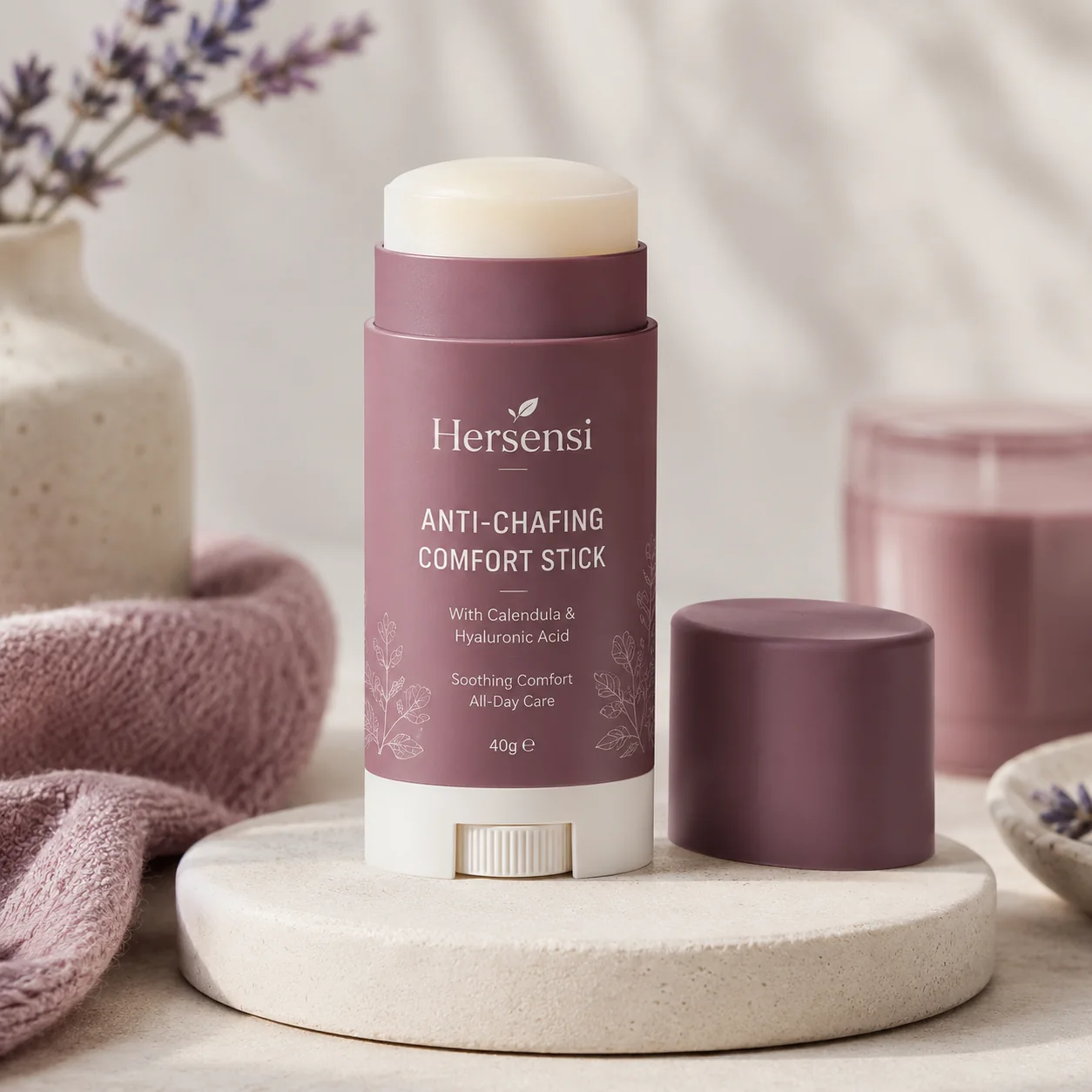
- Choose a stick for targeted application
- Choose balm when hand application is acceptable
- Neither format belongs on open wounds, internal intimate tissue or an unexplained rash.
Find where friction and moisture meet
A stick is convenient for direct application. A softer balm may spread easily but can be messier or more affected by heat.
Do not diagnose anti chafing stick vs balm from one photograph or one product response. Look at timing, location, sensation and repeat triggers before changing several steps.
Prevent rubbing before skin becomes raw
Use a short routine long enough to understand what changes comfort and what creates irritation.
- Choose a stick for targeted application
- Choose balm when hand application is acceptable
- Apply a thin even layer
- Test clothing transfer
- Reapply only as directed
Heat, clothing and medical red flags
In Pakistan’s heat, packaging stability matters for products carried in bags or cars.
Neither format belongs on open wounds, internal intimate tissue or an unexplained rash.
Questions before a long day or workout
Write down the answers before changing the routine. They often reveal a trigger that a new product cannot fix.
- Will the product travel in heat?
- Is direct application preferred?
- Does it transfer to clothing?
- Is skin intact?
What a friction product can do
For the situation covered in anti-chafing stick vs balm: choosing a friction barrier, a friction product may create slip on intact external skin. It does not treat infection, an unexplained fold rash or open wounds.
Wear time, heat stability and clothing transfer are product-specific, so field testing and clear reapplication directions matter.
Common questions
Questions people ask before changing the routine
Which lasts longer?
Wear depends on formula, sweat and activity.
Can I use it daily?
Use according to label and stop if irritation develops.
Is a stick more hygienic?
Direct application can transfer skin residue, so use it on clean skin.
Editorial sources
Where the safety framework comes from
These sources support the general educational and safety boundaries in this guide. They do not validate a specific Her Sesni formula or replace personal medical advice.
- How to prevent and treat blisters — American Academy of DermatologyFriction-reduction measures relevant to repeated rubbing and chafing.
- Allergens in cosmetics — U.S. Food and Drug AdministrationBackground on cosmetic allergic reactions and ingredient sensitivity.